
Is a Destination Wedding Actually Cheaper Than a Hometown Wedding? The Honest Breakdown
August 14, 2026
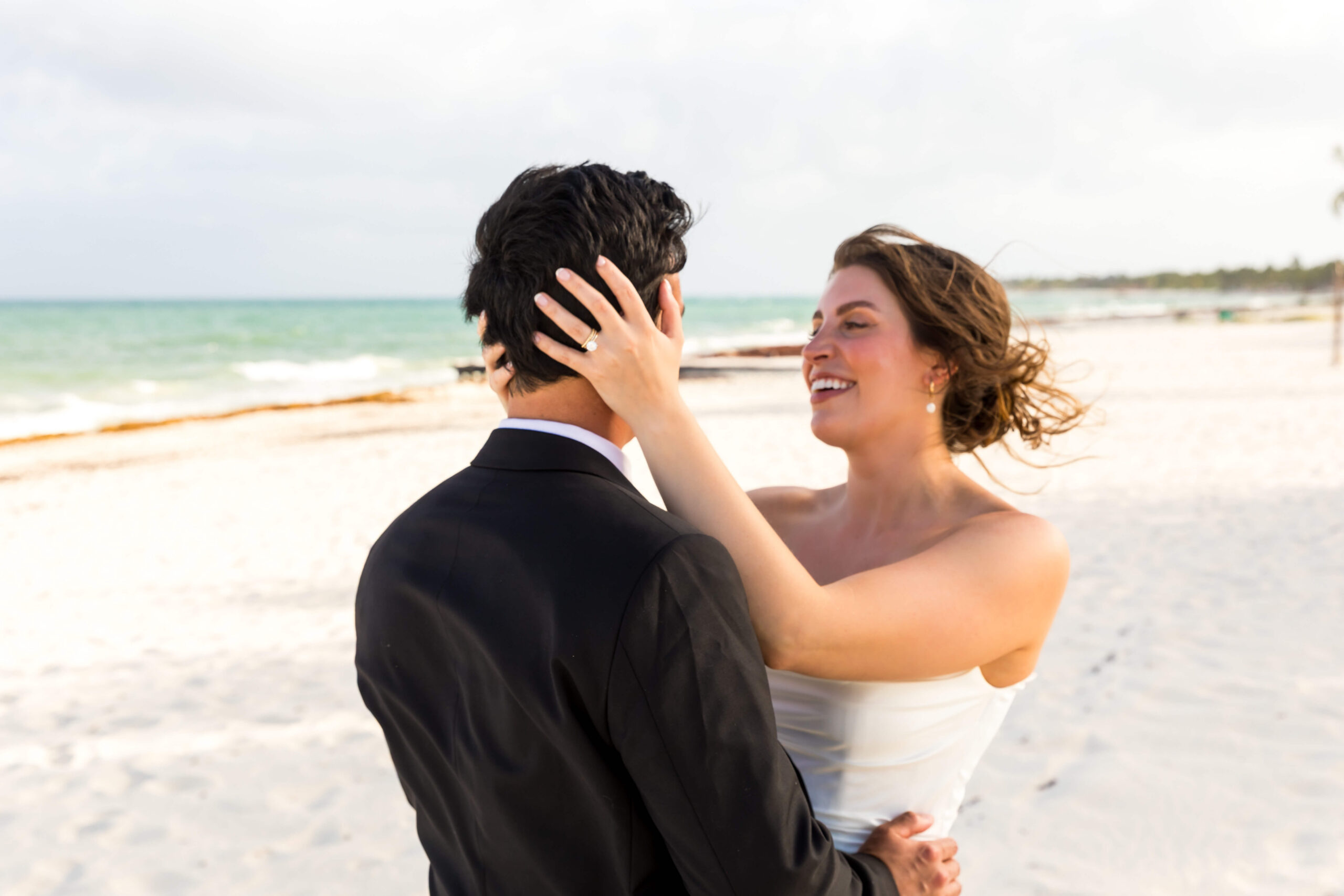
Jeannie & Ian, Hyatt Zilara Riviera Maya, Photo by Adventure Photos
If you’ve started planning a wedding in the last year, you’ve seen the ads. Destination weddings save you 60% off a traditional wedding. Get married in paradise for a fraction of the cost. They’re everywhere right now, and they’re not exactly wrong, but they’re not exactly right either.
Here’s the honest answer: it depends on where you already live and what you actually choose to include, not on whether you’re standing on a beach or in a ballroom.
As a destination wedding travel advisor who runs these numbers with couples every week, let me walk you through the real math instead of the ad copy.
What Does the Average Hometown Wedding Actually Cost in 2026?
According to The Knot’s 2026 Real Weddings Study, which surveyed over 10,000 couples married in 2025, the average U.S. wedding costs $34,200, or about $292 per guest, for an average guest count of 117 people.
That number moves a lot depending on where you live: Midwest around $29,000, South/Southeast around $31,300, Chicago specifically $54,000, New York City specifically $88,000, Wyoming $17,000. Same country, same basic wedding, wildly different bill. That regional swing matters more than almost anything else in this conversation, and we’ll come back to it.
What Does the Average Destination Wedding Actually Cost?
Most all-inclusive resorts offer wedding packages between $5,000 and $20,000+, covering ceremony setup, florals, cocktail hour, and reception. A good starting estimate to recreate a full wedding day (ceremony, cocktail hour, private reception with dinner and dancing) is $250 to $350 per guest, not including photography or videography since those vary widely.
Then there’s guest travel. Plan on a minimum of $1,800+ per person for a 3-night stay, plus airfare. That’s real money, and it’s often the number couples forget to account for when they compare “destination wedding cost” to “hometown wedding cost,” because it’s paid by guests, not by the couple.
So Why Do the Ads Say It’s Always Cheaper?
Here’s where I’ll push back on what’s showing up in your feed. Those “save 60 to 70 percent” numbers usually compare a best-case destination wedding (50 to 70 guests, all-inclusive package, no outside vendors) against a worst-case hometown wedding (117 guests, every vendor booked separately, big-city venue). That’s not a fair comparison. That’s marketing doing what marketing does.
Here’s a truth I tell every couple I work with: you can stand on a beach and get legally married tomorrow for free. Almost nobody actually wants that. The moment you add a ceremony setup, a reception, food, drinks, music, and photos, you’re not comparing “beach” to “ballroom” anymore. You’re comparing one list of included things to another list of included things.
Location isn’t what drives the cost. The options you choose are what drive the cost.
What’s Bundled vs. What’s Billed Separately
Destination, all-inclusive: venue, catering, basic florals, cocktail hour, and often entertainment are bundled into one package price, so there are fewer surprise invoices. Hometown, traditional: venue rental, catering, florals, rentals, and day-of coordination are typically billed separately by each vendor, and each one is its own negotiation. Destination, guest side: guests pay their own travel and lodging, but can choose from low, mid, or high-cost rooms while everyone still stays together. Hometown, guest side: guests pay for their own travel only if they’re coming from out of town, but often face higher per-plate costs passed through from the couple’s budget.

Jessica & Coby, UNICO 20°87° Hotel Riviera Maya
The Real Answer: It Depends Where You Already Live
If you live in a lower cost-of-living area, say a smaller city in Missouri, a destination wedding probably won’t cost less outright than getting married at home. What it will give you is an entire pre-planned group vacation with your closest people, for roughly the same spend you’d put toward one evening at home.
If you live in a high cost-of-living city, say Chicago, a destination wedding is usually cheaper outright, on top of that same vacation-with-your-people upside.
Either way, the honest reframe is value versus price. You may or may not spend less. You will almost always get more: a multi-day shared experience instead of a single night.
Where an Advisor Actually Earns Their Fee
Between resort websites, wedding Pinterest boards, and Instagram ads, most couples end up drowning in options before they’ve booked anything. That’s not a knock on couples. It’s just what happens when every resort, every package tier, and every add-on gets marketed at you at once.
This is genuinely the part of the job I care most about: helping you figure out what you’re actually paying for, so your money goes toward the things you’ll remember (the ceremony spot, the photographer, the welcome dinner) and not toward things you never really wanted in the first place. That’s the difference between a couple who feels good about what they spent and a couple who feels like they got talked into an upsell.
What You Get Beyond the Price Tag
A lot of couples feel guilty asking their guests to spend money on a destination wedding. Here’s something worth sitting with: your guests would spend money to attend a hometown wedding too. Travel, an outfit, a gift, a hotel for out-of-towners, it adds up either way.
A destination wedding just trades that same spend for a better, shared experience: several days together instead of one evening, built-in scenery instead of rented decor, and a trip your people will actually remember instead of a Saturday they drove to and back.
So, Is a Destination Wedding Cheaper Than a Hometown Wedding?
Sometimes. It depends on where you live right now, and it depends more on what you choose to include than on where the wedding actually happens. If you live somewhere expensive, the odds are in your favor. If you live somewhere affordable, you’re not necessarily saving money, but you are getting an entire group vacation for close to the same price as one wedding day at home.
Either way, don’t trust a flat percentage in an ad. Run your actual numbers.
How to Actually Budget for Your Destination Wedding
Start with $250 to $350 per guest to estimate the wedding day itself. Add $1,800+ per guest for a 3-night stay to get a realistic sense of what your guests will spend on travel. Then adjust once you have a real headcount, which usually isn’t until RSVPs are in, about 6 months before the wedding.
If you want help running your specific numbers instead of guessing from an average, that’s exactly what a complimentary consult with us is for. We’ll look at your guest list, your priorities, and your budget, and tell you honestly whether a destination wedding makes sense for you, not just whether it makes sense in general.
[Book your complimentary consult]

Lexi & Nick, Secrets Playa Blanca, Photo by Sierra Dykes Photography
Frequently Asked Questions
Is a destination wedding cheaper than a traditional wedding?
It depends on where you live and what you include. Couples in high cost-of-living areas often spend less on a destination wedding outright; couples in lower cost-of-living areas typically spend about the same but get a multi-day group trip included.
How much does the average destination wedding cost in 2026?
All-inclusive resort packages typically run $5,000 to $20,000+, or roughly $250 to $350 per guest for the wedding day itself, not including photography or videography.
How much does the average hometown wedding cost in 2026?
According to The Knot’s 2026 Real Weddings Study, the national average is $34,200, or about $292 per guest, based on an average of 117 guests.
Do guests pay for their own travel to a destination wedding?
Yes. Guests typically cover their own flights and lodging, budgeting a minimum of $1,800+ per person for a 3-night stay, though they can usually choose from a range of room price points.
Is a destination wedding cheaper if I live in an expensive city?
Usually, yes. Couples in high-cost cities like Chicago or New York, where the local average wedding cost is $54,000 to $88,000, tend to see the biggest savings by going the destination route.
What’s included in an all-inclusive destination wedding package?
Most packages include ceremony setup, basic florals, cocktail hour, and reception. Photography, videography, hair and makeup, and any outside vendors are usually priced separately, sometimes with an outside vendor fee.
How many guests should I expect at a destination wedding versus a hometown wedding?
Destination weddings average 50 to 70 guests. Hometown weddings average closer to 117 guests nationally, which is part of why the total cost comparison can be misleading without adjusting for guest count.