
Travel Agent Fees Explained: Why “Free” Isn’t Actually Free for Your Destination Wedding
August 21, 2026
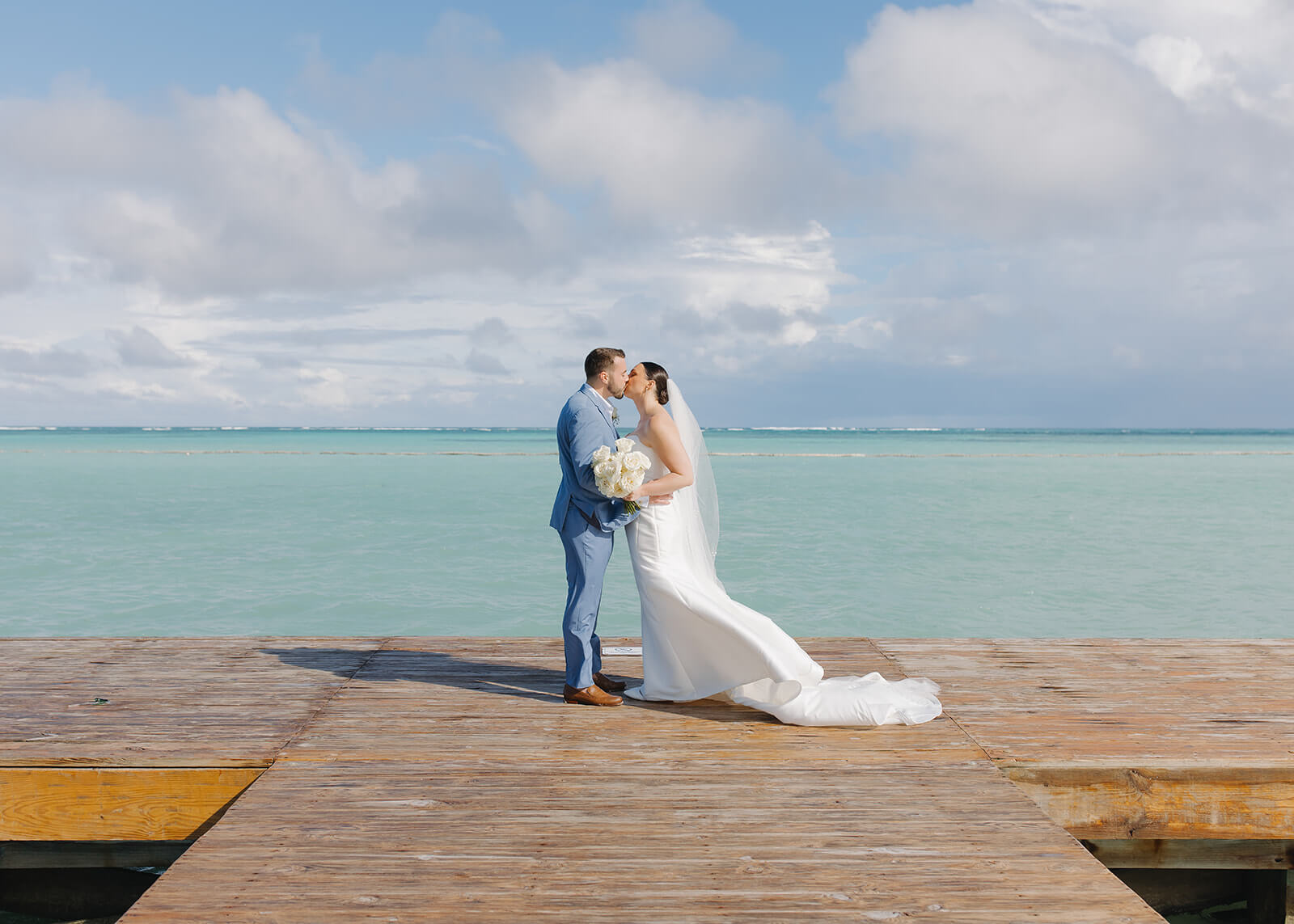
Sumer and Tanner, Hyatt Zilara Cap Cana Photo by The Iris Image
Let’s talk about the elephant in the room: the “free” travel agent.
You’ve seen the big-box booking sites promising a wedding specialist at no cost, ever. Here’s the truth: nothing in this industry is actually free. Someone gets paid either way. The real question is who, and whether their paycheck depends on what’s best for you, or on how fast they can move you through the pipeline.
Here’s how travel agent fees actually work, what an average fee costs by trip type, and why we built Alpaca Your Bags Travel around charging one. No sales pitch, just the facts.
Why Do Travel Agents Charge Fees At All?
- Fee-based: Fee-based travel advisors are compensated for their time and expertise the moment you hire them, not months later, and not only if a booking closes. Your wedding is worth our attention today, whether it books this week or in six months.
- Commission-only: Commission-based advisors only get paid after your trip is booked, and payout often trails weeks behind the actual travel dates. A “free” commission-only agent works for free upfront, relying on a high volume of clients for cash flow.
Which is better? At Alpaca Your Bags Travel, we’re biased, but we aren’t alone in our opinion. The American Society of Travel Advisors (ASTA), the industry’s largest professional group, made it official in its Credo of Beliefs: “ASTA travel advisors often charge clients professional fees, to reflect the value of the unique services they provide to their clients. We support this as a best practice.” ASTA president Zane Kerby put it plainly: the goal is to “normalize the idea that consumers should pay fees for the expertise of ASTA members.” Translation: charging a fee isn’t fringe anymore. It’s the professional standard.
How Do “Free” Travel Agents Actually Make Money?
Through commission from the resorts and suppliers they book, full stop. That means income depends on volume, and often on steering couples toward whichever property pays the highest reward. A single advisor at a large “free” booking service can be juggling 50 to 70 couples at once.
What happens when someone’s attention is split 50 to 70 ways? Quick, templated answers instead of a real conversation, plus a push toward whatever resort pays the most, whether or not it’s right for your guest list. That’s not a knock on the person answering your emails. It’s the model. A churn-and-burn volume operation and a boutique advisor aren’t selling the same thing, even at the same sticker price (free).
Fair question we get a lot: does charging a fee make us the only unbiased option? Not exactly. Plenty of good, independent, fee-charging advisors exist. The real fork in the road isn’t fee versus fee, it’s whether your advisor is managing 50+ couples at once or a deliberately small number. We cap our own workload at roughly 2 weddings a month, on purpose.
Why the Most Connected Generation Still Calls a Human
Here’s a stat that deserves its own spotlight: 51% of AI users who are younger travelers have used a travel advisor, the highest rate of any generation, ahead of Baby Boomers at 44% (ALG Vacations survey, 2026).
Read that again. The generation that grew up Googling everything, with AI in their pocket 24/7, still calls in a human for the trip that actually matters. Not because they can’t research. Because they’re smart enough to know when research stops being useful and turns into overwhelm.
A 2026 Chase Travel survey backs this up: 60% of younger travelers want to use an advisor, and 44% say they feel more overwhelmed by trip planning than they used to. Among those overwhelmed travelers, half downgraded their trip, over a third postponed it, and nearly a quarter canceled outright. Chase’s Rachel Skrod put it simply: “Travel can be complex. It’s too much planning for some travelers, especially when they’re dealing with high-demand periods or complicated itineraries.”
You can use AI to scroll a hundred resort reviews. You still need someone who’ll fight for your room block when a hurricane reroutes your wedding week, because AI won’t be on hold with the resort at 11pm. That’s not indecision. That’s knowing the value of real expertise.
What’s the Average Travel Agent Fee, By Trip Type?
Average travel agent fees aren’t one number, they scale with the actual job:
- Flight booked alone: $25 to $175 per ticket
- Basic vacation package or single getaway: $25 to $300 total
- Consultation only, no booking: $100 to $250, or $75 to $200+ per hour
- Complex, multi-destination or international trip: $300 to $700+
- Destination wedding, the highest-touch category: national average around $1,611, real range $420 to $6,175 depending on guest count and complexity. Group bookings like weddings often add a per-guest fee too, commonly $25 to $100 per person.
(Figures per Thumbtack‘s 2024 average cost report and AAA Trip Canvas.)
Managing dozens of guests’ travel questions and negotiating a group room block is a bigger job than booking one hotel room. The fee isn’t padding, it’s what lets an advisor cap their client load instead of running the volume model “free” requires.
A Boutique Fee-Based Travel Agent Is For You If…
- You’re planning a trip with real logistics: guest travel, a room block, a resort contract, a date to build around.
- You want honest advice, including the advice you didn’t ask for.
- You’d rather have one dedicated person in your corner than a rotating call center.
Alpaca Your Bags Travel Is Not For You If…
- You’re booking a single flight or one hotel room with no group involved.
- You’re shopping purely on the lowest number. “Deals” just aren’t our language.
- You want to research and book every detail yourself. Genuinely, that’s fine, just maybe not us.

What You Actually Get: Quality-Over-Quantity Advisor
We cap our client load on purpose. That’s the entire reason we charge a fee: it’s what lets us be hands-on instead of hands-off. Timely answers, your specific requests honored, and honest advice about the resort that looks perfect in photos but won’t actually work for your guest list.
It also means the same person on your first call is still answering the phone 12 months later, when the wedding is a week out and something’s changed. That continuity is the actual product.
“Could you go with a free travel advisor? Sure. But you won’t get the level of service, attention, and care that Alpaca Your Bags Travel provides.” Kevin, married in Riviera Maya, February 2025
“Just helping us pick a resort alone would have been worth the fee.” Crystal, married in Mexico, June 2024
“I know a lot of people go with free travel agents or choose to book everything themselves, but having her team and expertise was priceless for us.” Mariah, married in Cancun, April 2026
So, Is a Travel Agent Fee Worth It?
For a destination wedding with real logistics, a fee isn’t an extra cost. It’s what buys you a dedicated point of contact instead of a spot in someone else’s pipeline. You may not spend less. You’ll almost always get more: a plan built around your wedding, not whichever resort pays the best commission this quarter.
We’re not for everyone, and we like it that way. But if you’d rather be one of a small number of couples getting real attention than one of a hundred getting a form response, that’s what a planning fee buys you.
FAQ Section
Are travel agent fees normal now?
Yes. The American Society of Travel Advisors formally endorsed professional fees as a best practice in its Credo of Beliefs, and nearly half of all hosted travel advisors in the U.S. now charge one.
What’s the average travel agent fee for a destination wedding versus a regular trip?
It varies by complexity. A single flight or basic getaway typically runs $25 to $300. A destination wedding, the highest-touch category, averages around $1,611 nationally, with a real range of $420 to $6,175 depending on guest count and how much group logistics are involved (source: Thumbtack’s 2024 average cost report and AAA Trip Canvas).
Why do some travel agents charge nothing?
Free-to-you agents are paid entirely through supplier commission, which means their income depends on volume and often on steering clients toward higher-commission properties, whether or not those properties are actually the best fit.
Is a fee-based travel advisor worth it for a destination wedding?
For weddings with guest travel, room blocks, and resort contracts to manage, yes, for most couples. The complexity is exactly what the fee is paying for: a capped client load and a dedicated point of contact instead of a shared queue.
What’s the difference between a service fee and a commission?
A service fee is paid directly to the advisor for their time and expertise, regardless of whether you book through them. Commission is paid by the resort or supplier after a booking closes, and it’s the advisor’s only income in a “free” model.
Do I still pay for hotels, flights, and other trip costs on top of the advisor fee?
Yes. A planning fee covers the advisor’s time and expertise. It doesn’t include the cost of your actual travel, which you pay directly to the resort, airline, or other supplier, same as if you booked it yourself.
Does a smaller client load actually mean better service?
It’s the whole reason the fee exists. An advisor who caps how many couples they take on each year can answer questions quickly, learn your specific guest list and priorities, and advocate for you directly with a resort, instead of splitting attention across dozens of couples at once.

Ashley and Colin, Majestic Elegance Costa Mujeres, Photo by Coresfilms
Ready to see what a hands-on approach actually feels like? Book your free consult call and let’s talk about your wedding, not our sales pitch